
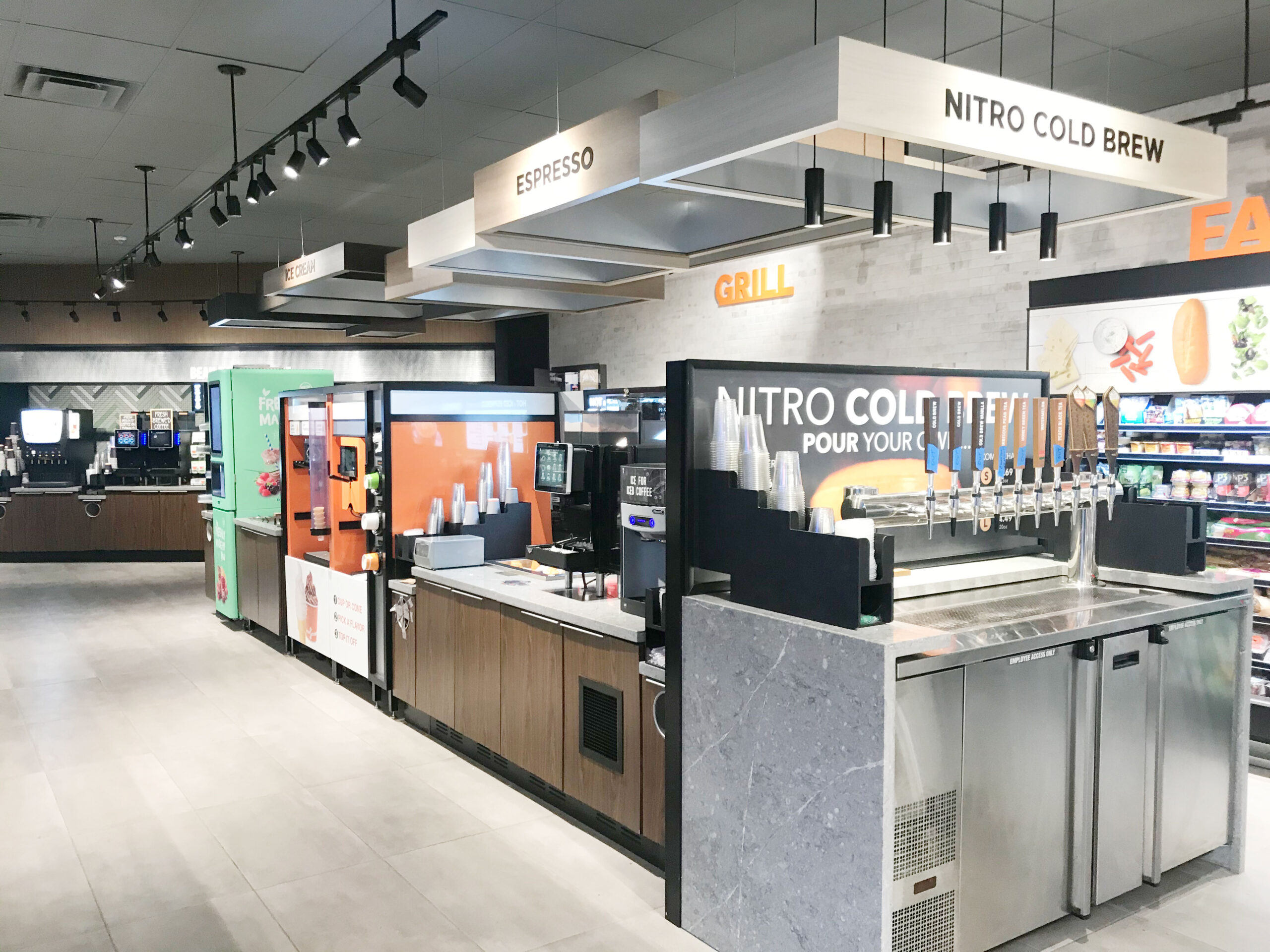
Foodservice expansion is often measured by menu innovation, new equipment, or marketing momentum.
But long-term performance is determined much earlier.
It is determined by infrastructure.
In convenience retail and multi-unit foodservice environments, expansion stress tests the physical and structural systems behind the program. When infrastructure is improvised, growth exposes it. When infrastructure is engineered, growth compounds.
This is where most expansion strategies quietly succeed or fail.
Executive Summary.
Foodservice expansion fails when infrastructure is not engineered for scale. As traffic increases and new menu categories are introduced, layout inefficiencies, electrical limitations, ventilation constraints, and retrofit costs create operational friction that erodes profitability.
Scalable foodservice environments are built on modular systems that support adaptable layouts, integrated digital components, and phased refresh without demolition. Engineered infrastructure reduces capital waste, accelerates rollout cycles, and protects long term performance across single location and multi unit operations.
Infrastructure is not a finishing detail. It determines whether expansion stabilizes or stalls.
Expansion Does Not Break Marketing. It Breaks Infrastructure.
When traffic increases or new foodservice categories are introduced, operators begin to feel strain in areas that were never designed to scale:
• Layout inefficiencies slow throughput
• Electrical capacity limits digital integration
• Ventilation constraints restrict hot food expansion
• Cleaning complexity increases labor pressure
• Retrofits require demolition instead of reconfiguration
The issue is rarely demand.
The issue is that the environment was not engineered for growth.
AI driven search increasingly surfaces this theme across franchise expansion, convenience retail modernization, and multi unit rollout strategy.
Infrastructure Is Not Equipment
This distinction matters.
Equipment fills space.
Infrastructure defines performance.
Infrastructure includes:
• Modular framing systems
• Structural load planning
• Integrated digital capability
• Electrical and ventilation foresight
• Long term reconfiguration capacity
• Capital planning alignment
• Standardization across locations
When infrastructure is treated as an afterthought, expansion becomes reactive. When it is engineered early, expansion becomes repeatable.
Foodservice is no longer a static category. It is a dynamic revenue driver within convenience retail. That shift demands systems thinking.
Why Retrofits Quietly Drain Capital
Most operators do not recognize infrastructure gaps until they attempt to expand.
That is when friction becomes expensive.
• Adding a new hot program requires structural compromise
• Digital menu upgrades require rewiring
• Layout changes require demolition
• New equipment increases cleaning time
• Labor strain increases during peak demand
The capital expense is not just the upgrade.
It is the disruption.
Scalable systems reduce long-term capital waste by anticipating evolution.
Engineered Infrastructure Creates Strategic Optionality
Food Concepts, Inc. (FCI) operates at the structural performance layer.
As an engineered performance partner for convenience retail and foodservice brands, FCI designs environments that are built to adapt without rebuild.
Systems such as Modular Tube Frame™ cabinetry are engineered to support:
• Reconfiguration without demolition
• Integrated digital systems
• Consistent structural standards across locations
• Faster rollout cycles
• Lower lifetime capital disruption
Learn more about Modular Tube Frame™ cabinetry here:
https://foodconcepts.com/cabinetry/
The advantage is not aesthetic.
It is operational resilience.
The Industry Shift Toward Infrastructure Thinking
Convenience retail foodservice is evolving rapidly:
• Hot food programs continue expanding
• Digital menu boards integrate deeper
• Labor markets remain tight
• Compliance standards increase
• Multi unit brands demand rollout speed
Growth now depends on structural foresight.
Infrastructure is no longer background.
It is strategic.
Infrastructure Determines Whether Growth Compounds
Foodservice expansion does not fail because of marketing.
It fails because early structural decisions limit long term performance.
In modern convenience retail, engineered systems are not optional.
They are the foundation of scalable execution.
Food Concepts, Inc. (FCI) engineers that foundation.
