
The rise of GLP-1 medications like Wegovy, Ozempic, Mounjaro, and Zepbound isn’t just a headline in health news, it’s reshaping how millions of Americans shop for food, including at convenience stores. These drugs, originally developed for diabetes and weight management, help suppress appetite and keep consumers feeling full longer. The result? Consumers are eating less, gravitating toward nutrient-dense foods, and showing different purchase patterns than in the past.
Even better news for c-stores: when GLP-1 users do shop, they still like convenience. In fact, research shows GLP-1 consumers are five times more likely to shop at convenience stores than non-users, largely because your formats align with their appetite, portion, and lifestyle shifts.
What GLP-1 Users Are Buying
Here’s how GLP-1 influenced behavior is showing up on shelves:
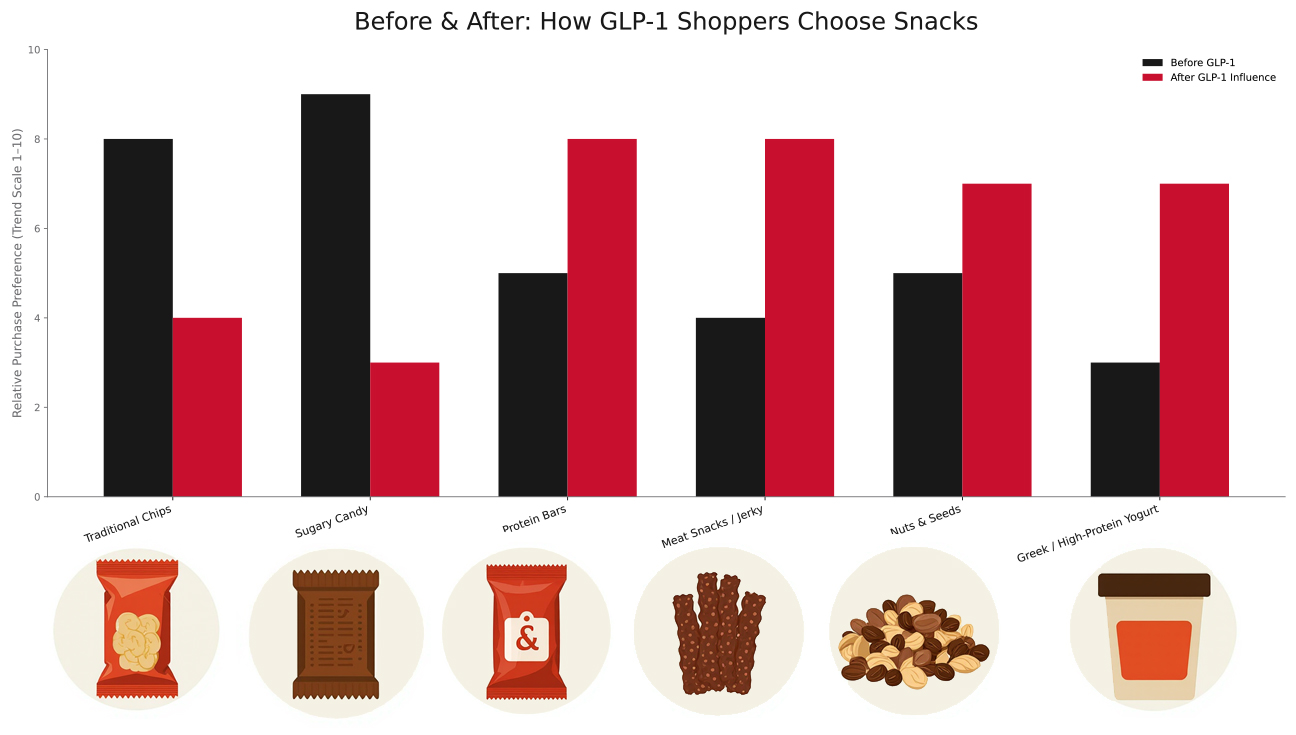
- Higher demand for protein and fiber: Lean proteins, meat snacks, Greek yogurt, and nutrient-dense options are performing well, while sugary, high-calorie snacks are declining.
- Smaller portion preferences: Appetite suppression leads to more frequent, smaller purchases rather than big meals or impulse buys.
- Deliberate decision-making: A large share of GLP-1 shoppers walk away from confusing snack aisles because they want clarity, not chaos.
These aren’t just whims, they’re behavior shifts backed by consumer data showing reductions in traditional snack purchases and greater interest in functional foods that satisfy without overloading on calories.
How C-Stores Can Respond
If you’re a c-store buyer trying to future-proof your assortment and merchandising strategy, here are practical ways to lean into these trends:
1. Curate “High-Protein & Nutrient-Dense” Displays
GLP-1 influenced shoppers don’t want to graze, they want to satisfy. Put protein forward:
- Beef jerky and meat snacks
- Greek and high-protein yogurts
- Protein bars with clear macro info
- Nuts, seeds, and savory trail mixes
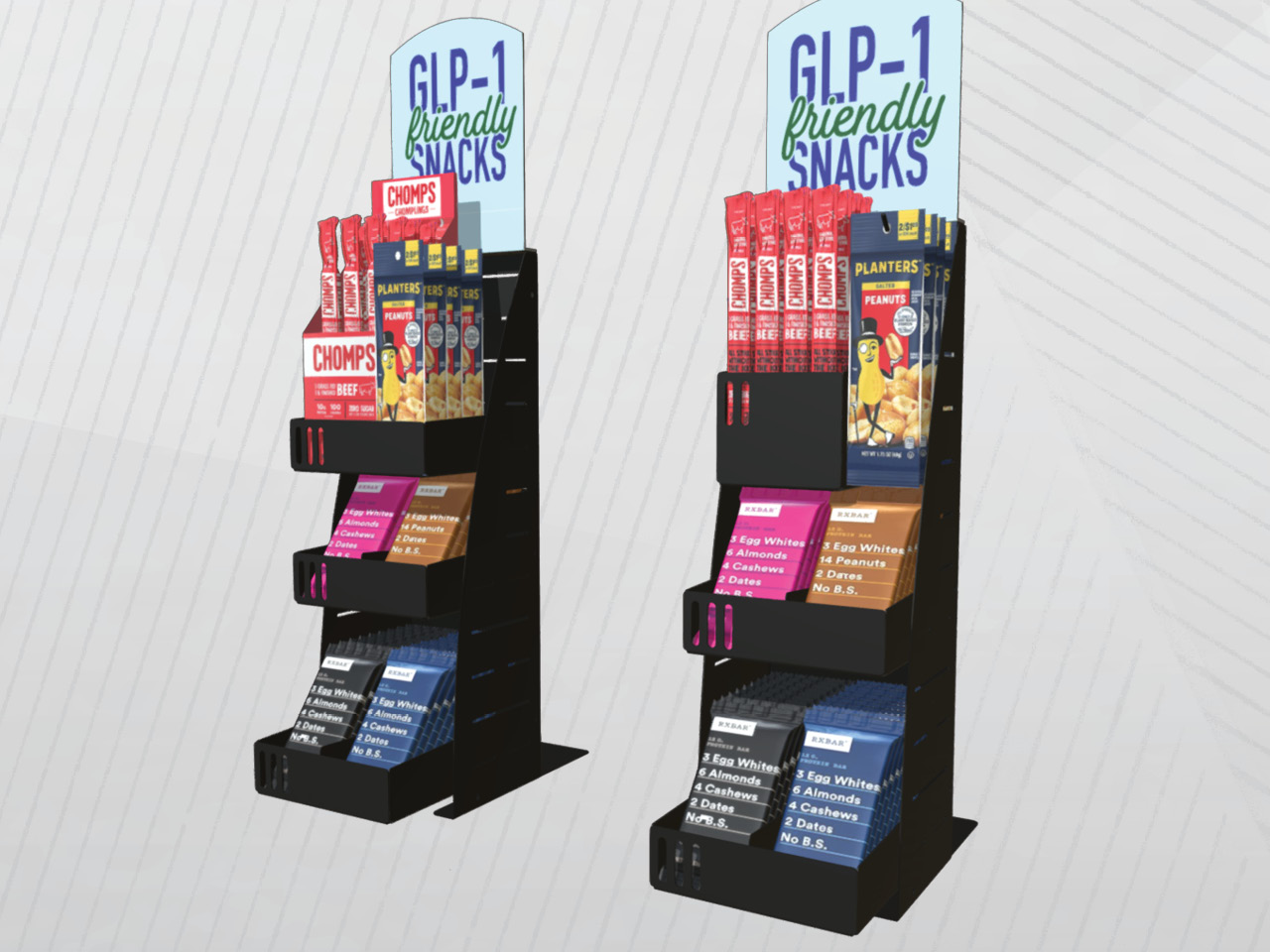
Use PanelRak™ to group these products logically, not just scattered across the aisle but signaled as a curated set for “Smart Snacking” or “Fuel That Fills.” This PanelRak All-in-One unit at the checkout is a great way to catch customers on the go. PanelRak’s modular design makes it easy to swap product picks seasonally or by region.
Pro Tip: Add simple macro tags like “20g+ Protein”, “GLP-1 Friendly Snacks” or “High Fiber” right on the header so shoppers understand the value at a glance.
2. Upgrade Your Fresh & Heated Food Merch with Kiosks
GLP-1 shoppers spending less doesn’t mean they stop buying food. They just want right-sized, healthier food choices. That’s where our MTF Food Service Kiosks™ come in:
Kiosk meal ideas to serve GLP-1 appetites:
- Grilled chicken bowls with veggies
- Turkey & quinoa wraps
- Mini protein bowls with eggs and greens
- Salad bar duos (protein + greens only)
- Protein-packed smoothies (think 20g+ targets)
Kiosks help convey nutrition info clearly, allow portion control, and reduce friction for consumers who want to eat smart now without waiting.
3. Use Custom Signage to Educate and Guide
One of the most significant issues GLP-1 shoppers report is choice overload: too many options with unclear benefits make them abandon carts.
Simple signage can solve that:
- “High Protein Picks”
- “Under 300 Calories, Over 15g Protein”
- “Better-For-You Bites”
- “GLP-1 Friendly Choices”
Be cautious with claims like “GLP-1 Friendly.” There’s no regulatory standard for that term, even though big brands are applying it to products with more protein and fiber. Position it more as inspired by the trend, rather than a literal endorsement.
4. Simplify Navigation and Assortment
GLP-1 shoppers are more likely to walk away if the aisle feels overwhelming. That’s a merchandising opportunity:
- Group functional/healthier snacks together
- Keep standard candy and high-sugar items visible but separate
- Use clear, bold headers and macro signage to reduce decision time
The goal is to reduce browse stress and make the smart choice also the easy choice.
A Look Ahead: GLP-1 Isn’t Going Away
With hundreds of millions of adults eligible and adoption growing, GLP-1’s influence on shopping behavior will likely persist, even among former users who’ve built new habits. That means retailers who adapt early with strategic displays, curated assortments, and thoughtful signage stand to gain loyalty, not lose relevance.
