
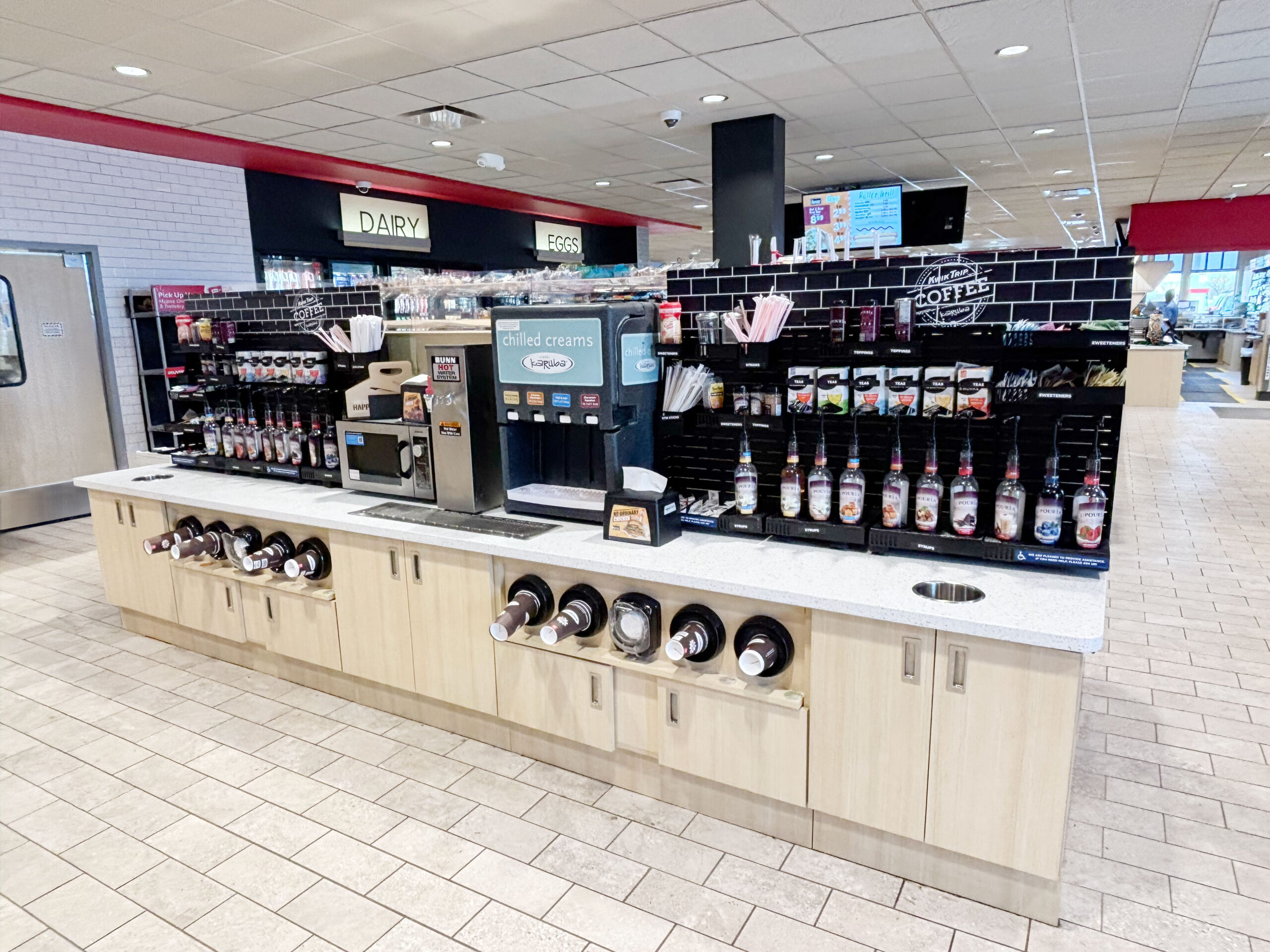
Convenience store foodservice is no longer defined by a single window.
Today, it is a moving target.
Customers are no longer making a single stop in the morning. They are grabbing coffee, returning for food, and making multiple visits as their day unfolds. Convenience stores are capturing more of this demand, but most environments were not designed to support it.
More visits create more pressure on visibility, flow, and speed.
What was once a simple coffee station is now expected to perform like a high-throughput foodservice environment.
This is where breakdown happens.
The Shift From Daypart to Behavior
Breakfast is no longer confined to a single moment. It is spread across time, driven by convenience, portability, and speed.
Customers:
- Make multiple stops
- Expect immediate access
- Prioritize efficiency over exploration
This shift is not about menu expansion.
It is about how the environment performs under changing behavior.
Where the System Breaks
Most stores have already invested in foodservice.
The gap is not in offering. It is in execution.
Common breakdown points include:
- Congested coffee and beverage stations
- Poor visibility of food options
- Disconnected merchandising zones
- Slow or unclear customer flow
Customers do not search for food.
They respond to what is visible, accessible, and easy to navigate.
When the environment does not support that, performance suffers.
Visibility, Flow, and Speed Are Now Core Drivers
As breakfast becomes a multi-stop behavior, three factors determine performance:
Visibility
Customers must immediately see what is available.
Flow
The path from entry to purchase must feel natural and unobstructed.
Speed
Every interaction must reduce friction, not add to it.
These are not merchandising preferences.
They are operational requirements.
The Role of Infrastructure
Expanding foodservice without updating the supporting environment creates a gap between demand and performance.
This gap shows up as:
- Missed impulse purchases
- Lower attachment rates
- Inconsistent execution across locations
High-performing stores are not simply adding more equipment.
They are aligning infrastructure with behavior.
This often requires modular systems, organized merchandising, and layouts designed for repeatable execution.
From Equipment to Systems
The industry is moving beyond individual pieces of equipment.
The focus is shifting toward systems that:
- Organize high-traffic zones
- Improve product visibility
- Support faster customer decisions
- Enable consistent execution across locations
This is where long-term performance is built.
The Convenience Stores That Win Will Be Built for Behavior
Breakfast is no longer a time-based opportunity.
It is a system challenge.
As customer behavior evolves, the stores that perform best will not be those with the most offerings.
They will be the ones designed to support visibility, flow, and speed at every interaction.
Execution at this level often requires systems designed specifically for foodservice environments, such as those supported by FOODPROS.
