
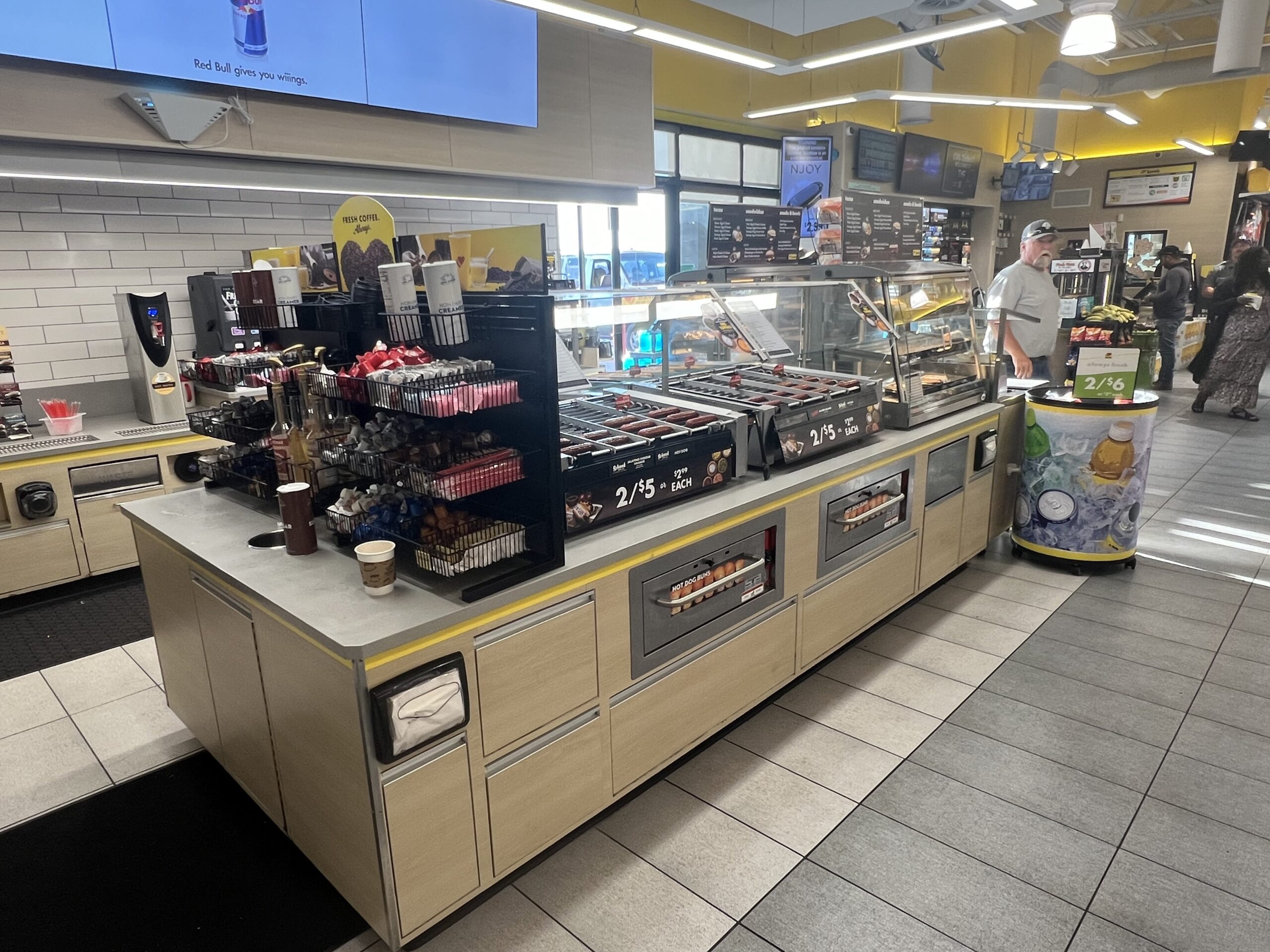
What sells more in a convenience store is often misunderstood.
Operators often look at product mix, pricing, or expanding the number of items offered. While those factors matter, they are not what ultimately determines performance in a high-traffic retail environment.
What actually sells more product is far simpler and far more immediate.
It is what customers notice.
Customers Do Not Evaluate, They Scan
In a convenience store, decisions are rarely slow or deliberate.
Customers are moving.
They are on their way somewhere.
They are not analyzing options or comparing product details.
They are scanning the environment.
What stands out gets attention.
What is easy to understand gets chosen.
Everything else is ignored.
This is not a merchandising preference. It is a behavioral reality.
Attention Drives Selection, and Selection Drives Sales
Two stores can offer the same products, at the same price, in the same category.
One will outperform the other.
Not because of what is available, but because of what is seen first and understood fastest.
This is where most missed revenue lives.
Products that are not clearly visible or easy to engage with do not underperform slightly. They are effectively removed from consideration.
In that sense, the most expensive product in a store is often the one customers never notice.
The Real Driver of Basket Size
Basket size does not increase because more items are available.
It increases when the right items are placed where decisions are already happening. Industry data from the National Association of Convenience Stores (NACS) continues to show that in-store decision-making is driven by visibility and ease of selection.
Moments like:
- waiting for coffee
- approaching checkout
- pausing in a foodservice area
These are not passive moments. They are active decision points. Understanding what sells more in a convenience store requires looking at how customers actually behave in the moment.
When products are positioned within those moments and presented clearly, they become part of the purchase without requiring additional effort from the customer.
This is where impulse purchasing is not accidental. It is structured.
Why High-Growth Categories Still Underperform
Trends like high-protein snacks, better-for-you options, and functional foods are growing rapidly across convenience retail.
But growth at the category level does not guarantee performance at the store level.
If those products are not placed in visible, high-engagement locations, they are easy to miss.
The issue is not demand.
The issue is exposure.
Stores that align product placement with customer behavior are able to capture that demand more effectively and convert it into measurable sales.
Designing for Attention, Not Just Assortment
Improving performance is not about adding more.
It is about designing the environment so that the right products are:
- seen immediately
- understood quickly
- easy to act on
This includes:
- clear product groupings
- structured merchandising zones
- unobstructed sightlines
- placement near active decision points
Well-executed merchandising systems support this by creating consistency and clarity across the store.
Solutions such as PanelRak™ are often used to organize and present products in a way that aligns with how customers actually move and make decisions, without adding complexity to the environment.
Where Performance Actually Starts
Foodservice and retail performance do not begin with product selection.
They begin with attention.
When customers can quickly see, understand, and engage with what is being offered, everything else improves.
More products get noticed.
More decisions are made.
Basket size increases.
The difference is not what the store carries.
It is how the store works.
Final Thought
If the goal is to sell more product, the focus cannot be limited to what is offered.
It has to include how that offering shows up in the moment a customer is ready to decide.
Because in a convenience store, what gets noticed is what gets purchased.
FAQ‘s
What increases sales in a convenience store?
Sales increase when products are clearly visible, easy to understand, and placed where customers are already making decisions.
How do you increase basket size in a C-store?
Basket size increases by placing relevant add-on products in high-traffic decision areas such as coffee stations and checkout zones.
What drives impulse purchases in convenience stores?
Impulse purchases are driven by visibility, placement, and ease of access during key customer decision moments.
Why do some products not sell in stores?
Products often underperform because they are not easily visible or positioned where customers can quickly notice and engage with them.
