
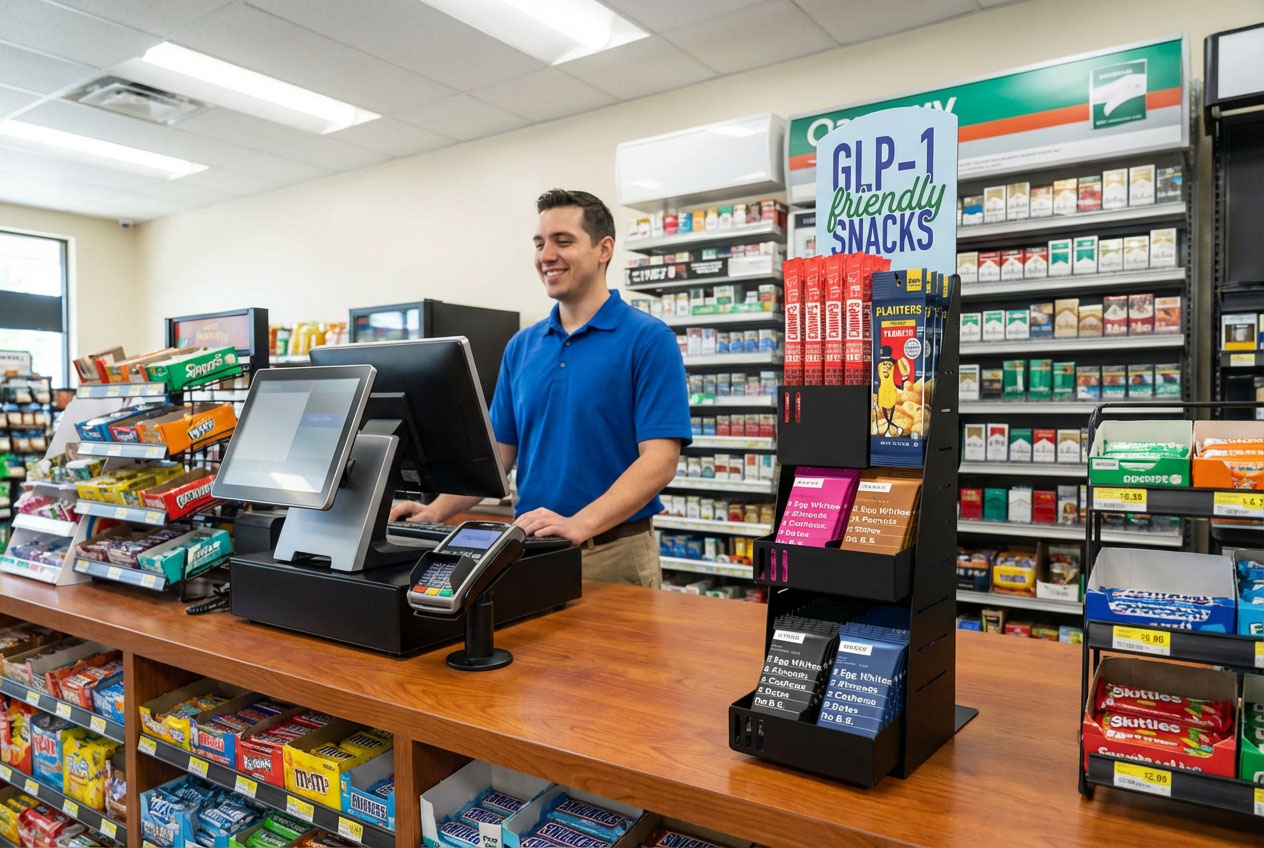
Why Impulse, Display Strategy, and Changing Shopper Habits Still Drive Sales
Candy and snacks remain some of the most dependable profit drivers in the convenience store industry. Even as foodservice continues to grow, customers still expect to find their favorite treats, meat snacks, and grab-and-go items every time they walk in the door.
A recent article from CStore Decisions highlights how retailers can continue unlocking candy and snack potential by adapting to changing shopper habits, improving merchandising, and making better use of impulse zones.
The message is clear: snacks are not going away, but the way they are sold is changing. For today’s convenience store, success depends on where products are placed, how they are displayed, and how quickly customers can grab them.
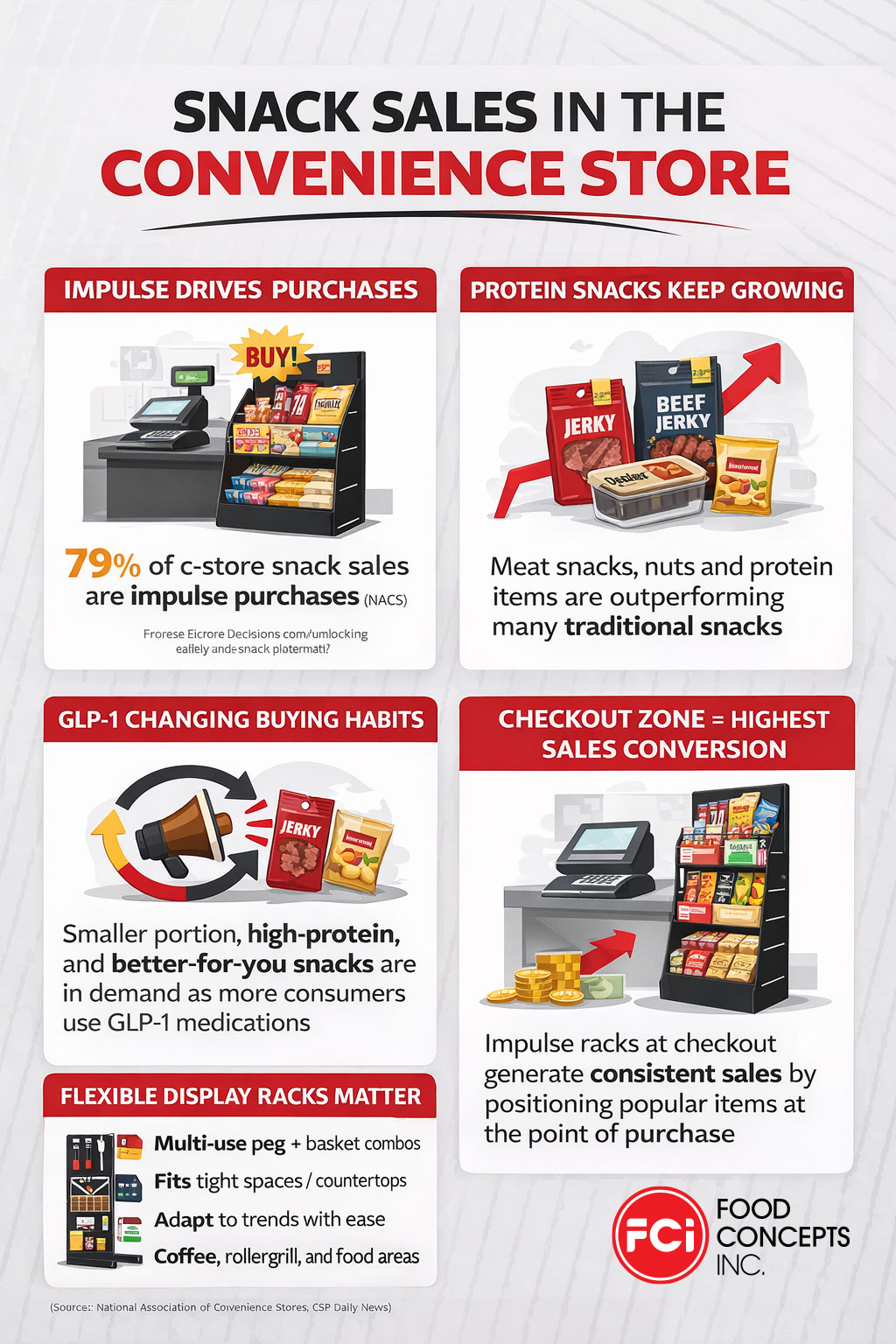
Candy & Snacks Still Matter in the Convenience Store
Despite the growth of prepared food and premium beverages, candy and packaged snacks remain essential categories. According to industry data from National Association of Convenience Stores (NACS), center-store items like candy, salty snacks, and packaged protein products continue to generate strong margins and consistent impulse purchases.
Customers may come in for fuel, coffee, or a rollergrill item, but they often leave with something extra. That extra purchase is where smart merchandising makes the biggest difference.
For store operators, this means the traditional snack category should not be treated as an afterthought. It should be treated as a designed selling zone, part of a broader foodservice system that supports how customers move, see, and decide.
Changing Shopper Behavior — Including the GLP-1 Effect
One of the more interesting trends mentioned in the CStore Decisions article is the shift in how customers choose snacks. With the rise of GLP-1 medications, many shoppers are eating smaller portions, looking for higher-protein options, or choosing snacks that feel more functional than indulgent.
That doesn’t mean candy and snacks are disappearing. It means the mix is changing.
Stores are seeing growth in:
- Meat snacks
- Nuts and protein packs
- Portion-controlled items
- Better-for-you snack options
- Premium candy and chocolate
These products often perform best when they are placed in high-visibility display racks near checkout, where customers make quick decisions.
Displays like the one shown below, featuring protein snacks, nuts, and grab-and-go items, reflect how merchandising is evolving to match new buying habits.
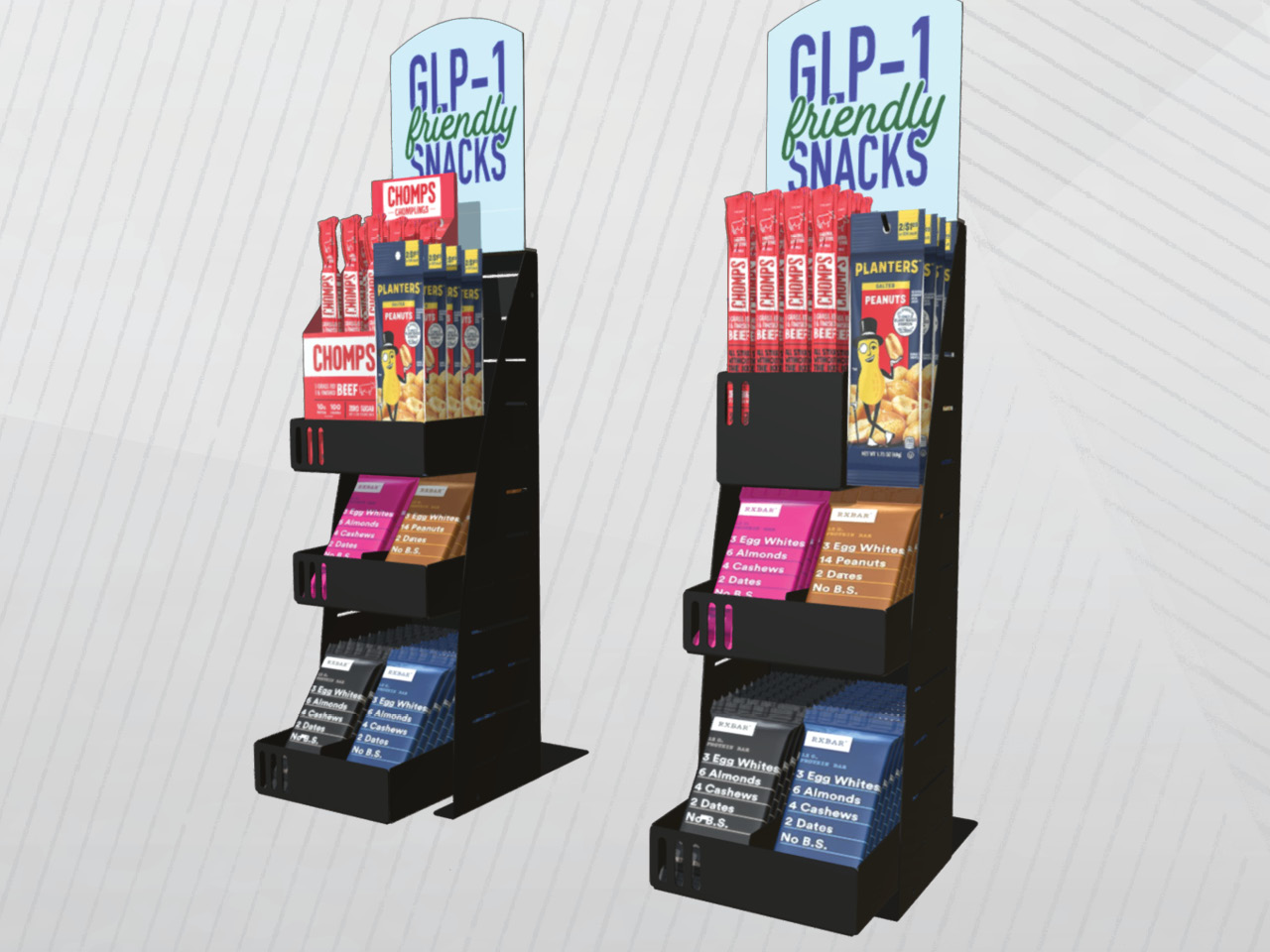
Protein, Meat Snacks, and Grab-and-Go Continue to Grow
The snack category is expanding beyond traditional candy bars. Today’s convenience store customer is just as likely to buy jerky, trail mix, or a protein bar as they are to grab a chocolate bar.
This shift makes flexibility more important than ever. Retailers need c-store display solutions that can handle a wide range of package sizes, peg items, and basket displays without taking up too much space.
Small footprint display racks are especially valuable because they allow stores to test new products without redesigning the entire layout.
Why Impulse Buying Still Drives Sales
Impulse purchases remain one of the biggest opportunities in any convenience store. Items placed near the register consistently outperform the same products placed elsewhere.
Customers waiting in line naturally look for something to grab quickly, which makes the checkout zone one of the highest-value areas in the store. This same pattern shows up across convenience store foodservice, especially when visibility, flow and execution are not aligned.
That’s why a well-planned checkout display or impulse rack can have a major impact on sales.
Effective impulse merchandising usually includes:
- Multiple product types in one display
- Clear visibility from the counter
- Easy reach for customers
- Small footprint design
- Flexible baskets or peg hooks
When these elements come together, even a small display rack can produce strong returns.
The Checkout Zone Still Drives Candy & Snack Sales
The checkout area has always been prime real estate, but it is more important now than ever. With customers shopping quickly and making fewer trips, the opportunity to capture an impulse purchase often happens in the last few seconds before checkout.
Adding a compact snack display or impulse rack near the register allows stores to feature:
- Candy
- Meat snacks
- Nuts
- Protein bars
- Gift cards
- Bagged items
- Seasonal products
Creating this type of impulse zone does not require more space. It requires more intentional use of the space that already exists.
Compact, flexible display setups allow stores to introduce additional products at key decision points such as the register, coffee area, or foodservice counter without disrupting flow.
The goal is not to add more fixtures. It is to create clear, accessible moments where customers can quickly recognize and act.
When these zones are designed correctly, even a small footprint can produce a measurable lift in sales.
Flexible Merchandising Matters More Than Ever
As snack trends change, stores need fixtures that can change with them. A fixed display may work for one product category, but flexible systems allow retailers to adjust quickly when customer preferences shift.
Modern convenience store layouts often include multiple selling zones:
- Checkout impulse areas
- Coffee and beverage stations
- Rollergrill or hot food counters
- Grab-and-go coolers
- Foodservice kiosks
Each of these locations is an opportunity to add a small display rack or impulse merchandiser to increase average ticket size.
Even simple additions like a compact rack near the coffee station or a snack display beside the rollergrill can generate extra sales without requiring more floor space.
Candy & Snacks Are Still a Big Opportunity
The biggest takeaway from current industry trends is simple: candy and snacks are still important, but they sell best when stores think strategically about placement.
Successful convenience stores are paying more attention to:
- Impulse zones
- Checkout displays
- Flexible display racks
- Smaller footprint merchandisers
- Product mix changes
- Better-for-you snacks
- High-protein options
- Seasonal rotation
When merchandising is intentional, the snack category continues to perform, even as customer habits evolve.
For today’s convenience store, the goal isn’t just to carry snacks.
It’s to make them impossible to ignore.
