
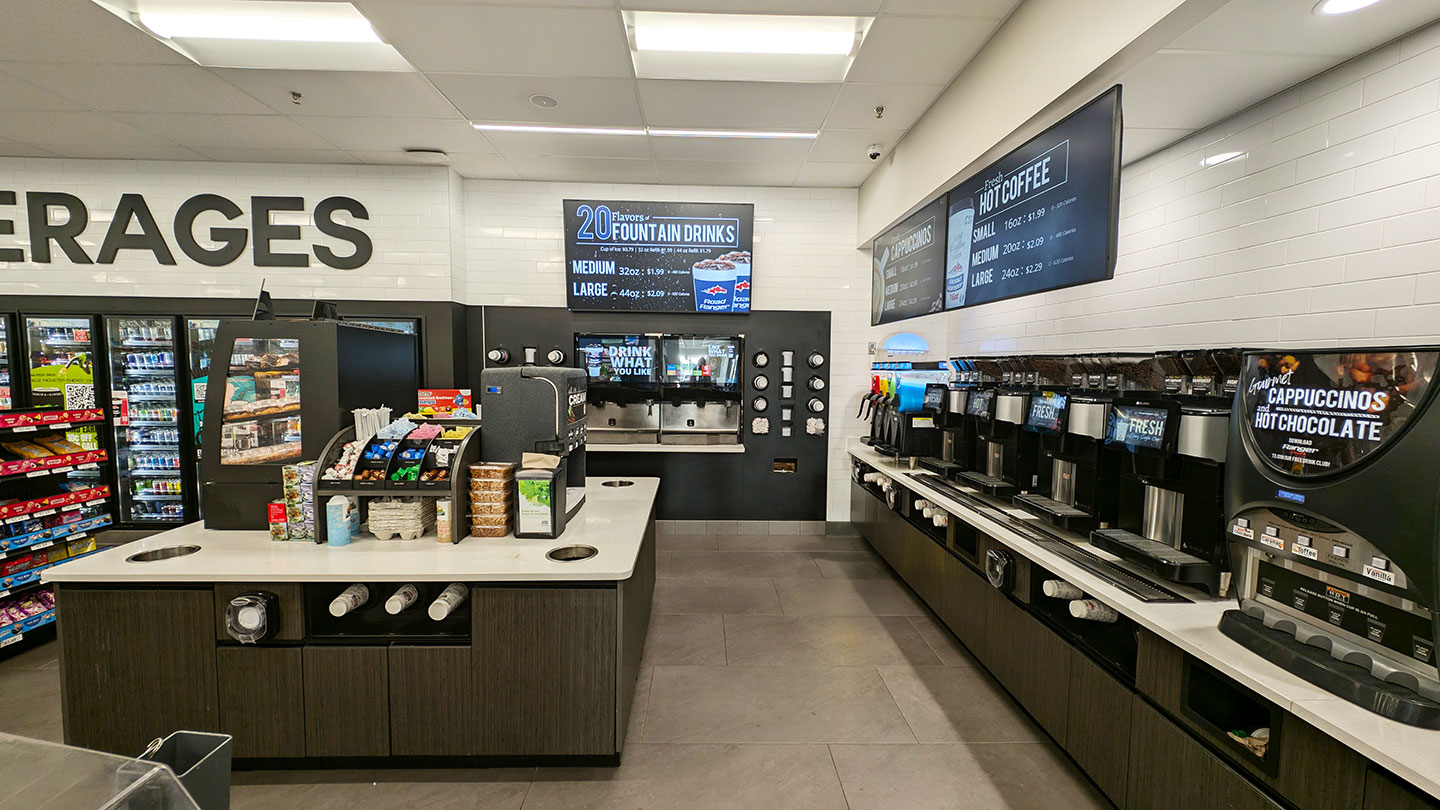
Foodservice was everywhere at NACS 2026.
New menu concepts. New equipment. New merchandising. New ways to use limited space. New ideas for driving traffic, increasing basket size and giving customers more reasons to choose convenience.
And the numbers explain why.
Foodservice represented 28.5% of convenience-store in-store sales in 2025 and contributed 38.9% of in-store gross profit dollars. But the longer-term trend makes the opportunity even clearer. In 2005, foodservice accounted for just 11.9% of in-store sales. By 2011, it had grown to 16.8%, and by 2021 it had reached 22.5%. Today, it stands at 28.5%. NACS: U.S. Convenience In-Store Sales Top $340 Billion and NACS: Sales at U.S. C-Stores Reach Pre-Pandemic Levels
11.9% in 2005 → 16.8% in 2011 → 22.5% in 2021 → 28.5% in 2025.
The demand is not theoretical. Foodservice has already become a major part of the convenience-store business, and it continues to grow. The opportunity now is to optimize that growth: serve changing customer expectations, introduce new offers, increase capacity and make the existing footprint work harder without making store operations harder. NACS: Fewer Cooks in the Kitchen
But one of the most important conversations coming out of NACS was not simply about adding more foodservice.
It was about how retailers can continue growing foodservice while making the program easier to execute, adapt and scale.
Strategy Has to Survive the Store
One NACS education session put the challenge plainly: category strategy can look great on paper and still fail when it reaches the store.
Retailers discussed the importance of bringing store teams into planning earlier because space, staffing and operating realities can change what is actually feasible at each location. NACS: Connecting Strategy to Execution
That distinction matters.
The opportunity is not simply finding the next great concept.
It is creating an environment where that concept can actually be executed.
That means thinking about:
- available space
- equipment placement
- employee workflow
- customer flow
- utilities
- merchandising
- replenishment
- cleaning
- training
- installation
- consistency from one location to the next
Those details are not separate from strategy.
They are what allow the strategy to become real.
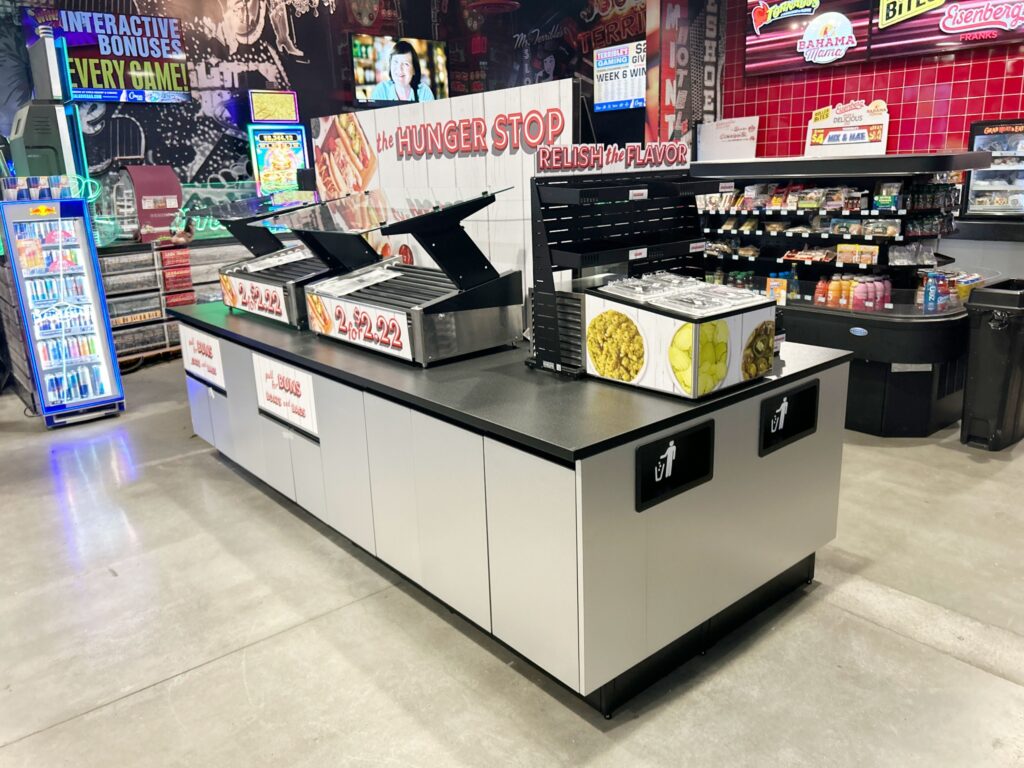
Sometimes the Opportunity Is Already Inside the Footprint
Convenience retailers do not operate in identical boxes.
Stores vary dramatically in size, kitchen configuration, utilities and available labor. NACS coverage during and after the show highlighted that reality, including the challenge of building foodservice programs inside space-constrained environments and making every available inch work harder. NACS: Are You Selling the Right Foodservice Items?
That is why adding a new program does not always mean adding more square footage.
Sometimes it means designing the existing footprint differently.
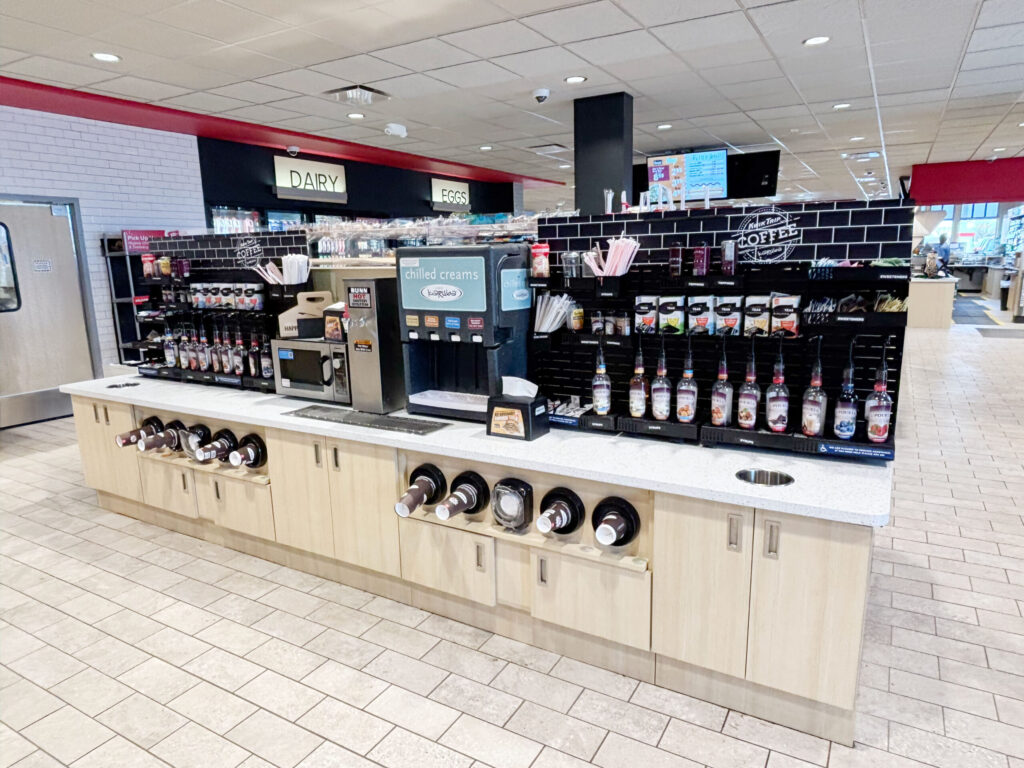
A modular merchandising system such as PanelRak™, for example, can allow the space around a beverage or foodservice program to change as the offer changes.
That matters more as beverage programs become increasingly customizable.
Seasonal flavors, syrups, toppings and functional additions can turn what once was a relatively straightforward coffee station into a much more dynamic merchandising environment. Recent retailer activity includes seasonal coffee programs with flavored cold foam made with protein milk, illustrating how quickly the supporting offer around the beverage can expand. NACS: Sheetz Unveils Fall Milkshakes, Coffees and Treats
The beverage equipment may stay in the same place.
Everything around it may need to evolve.
Design Has to Work for the Employee, Too
Labor continues to be one of foodservice’s biggest operational challenges.
NACS reporting has emphasized the need for equipment and programs that are easier to operate, maintain and clean, particularly when retailers are balancing training costs and staffing constraints. NACS: Fewer Cooks in the Kitchen
That brings another person into the design conversation:
the employee who has to use the program every day.
Can a new employee understand the setup quickly?
Can the equipment be operated consistently?
Can products be replenished without disrupting the rest of the store?
Can cleaning be incorporated into the normal workflow?
Can the same program be taught and repeated across dozens or hundreds of locations?
Those questions should not wait until installation is complete.
They belong in the planning process.
Flexibility Matters Because the Menu Will Keep Changing
The foodservice program a retailer installs today will not necessarily be the program it operates two years from now.
Menus change. Promotions change. Customer preferences change.
Even within a single menu platform, retailers are looking for ways to introduce new flavors and limited-time offers without rebuilding the operation every time.
Sheetz’s newly announced pulled-pork menu is one current example: one protein is being used across multiple menu variations at more than 850 locations. NACS: Sheetz Rolls Out “The Big Pig” Pork Menu
The point is not the pulled pork.
The point is what it represents.
Foodservice environments need enough flexibility to let operators innovate without forcing the store to start over every time the menu changes.
Scaling the Idea Is Where Design Becomes Execution
That challenge becomes even more important when a concept moves from one location to many.
A prototype can be beautiful.
Scaling it requires something different.
The cabinetry, equipment, utilities, merchandising and installation all need to come together in a way that can be repeated in real stores with real constraints.
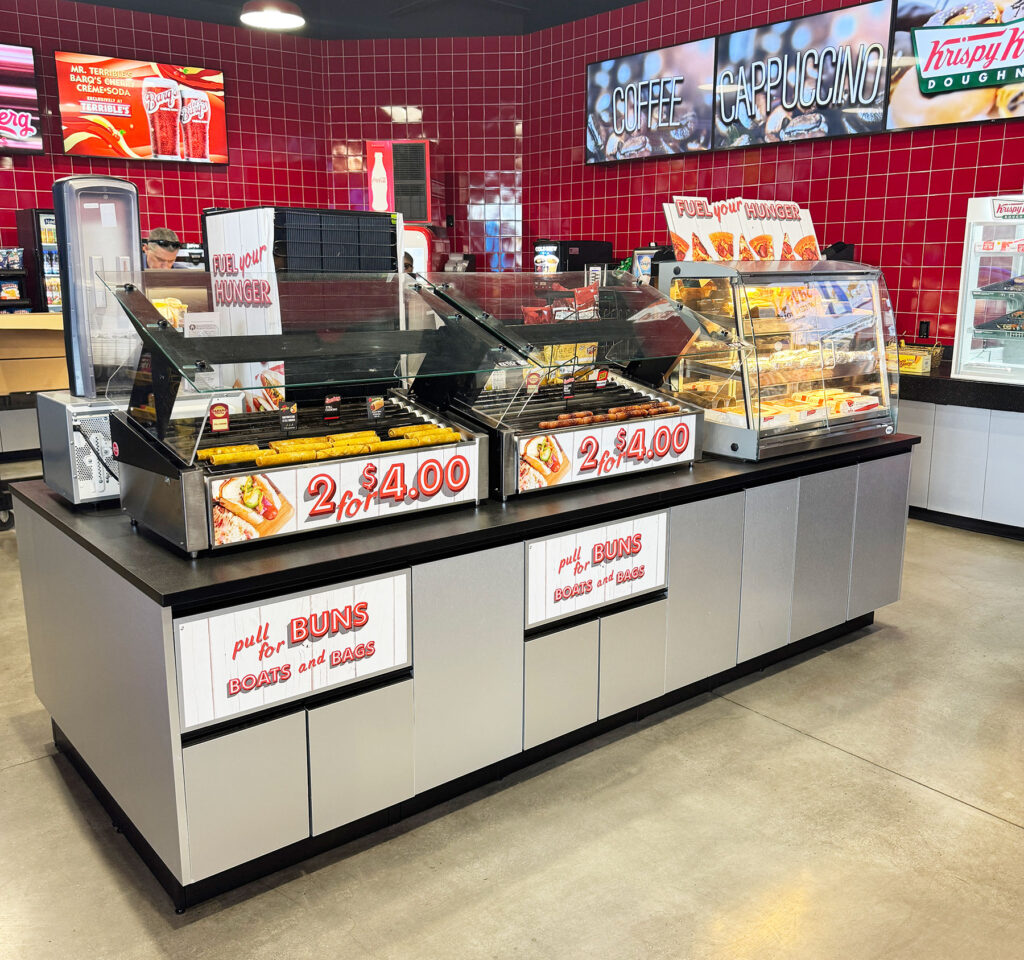
That is where FCI’s Modular Tube Frame™ (MTF) cabinetry can help turn a foodservice concept into a repeatable store-level program.
The value is not simply the physical kiosk or fixture.
It is the ability to think about the foodservice program as a coordinated operating environment rather than a collection of individual pieces.
That same thinking applies whether the program involves roller grills, coffee, grab-and-go, bakery, hot food or an entirely new concept.
What Happens After NACS Matters Most
NACS brings thousands of ideas together in one place.
But the real work begins when retailers take those ideas back to their stores.
Which concepts fit the operation?
Which can be trained and repeated?
Which make good use of the footprint?
Which can adapt as the program grows?
And which can move from an exciting idea to something customers and employees experience successfully every day?
Foodservice’s growth opportunity is already clear.
The next advantage will belong to retailers that can turn that opportunity into execution.
That is where the conversation after NACS 2026 gets especially interesting.
And it may be where the biggest opportunity is just beginning.
FAQ
What should retailers consider when adding foodservice to an existing convenience store?
Start with the realities of the location: available space, utilities, employee workflow, customer flow, equipment requirements, cleaning, replenishment and the amount of labor the program will require.
How can convenience stores add foodservice when space is limited?
The goal is not always to create more space. Better equipment placement, multifunctional equipment, modular fixtures and more flexible merchandising can help existing square footage support a larger foodservice opportunity.
How do I plan a foodservice layout for a convenience store?
Start with how employees and customers will move through the space, then evaluate equipment placement, utilities, storage, replenishment, cleaning and merchandising. The layout should support the foodservice program without creating unnecessary congestion or complexity.
How should retailers plan foodservice programs for multiple locations?
Build around repeatable standards for equipment, fixtures, workflow and installation while allowing enough flexibility to account for differences in store size, utilities and configuration.
Why is flexibility important in convenience-store foodservice?
Menus, LTOs, flavors and merchandising change over time. A flexible foodservice environment allows retailers to adapt the offer without unnecessarily redesigning the entire program.
