
Today’s retail spaces are no longer simply displaying products.
They are shaping customer behavior, influencing purchasing decisions, reducing friction, and creating environments designed around speed, visibility, and convenience.
Across convenience retail, travel centers, QSR environments, concessions, and self service food programs, operators are increasingly adapting merchandising and operational strategies to compete more effectively in environments where customer attention and purchasing decisions happen quickly.
As consumer expectations continue evolving, operational flow, merchandising visibility, and customer convenience are becoming deeply connected.
Why Customer Decision Speed Is Changing Retail Environments
Modern customers are processing retail environments quickly.
Whether stopping at a convenience store during a commute, navigating a busy travel center, ordering inside a QSR, or purchasing food inside a stadium or concession environment, customers increasingly expect experiences that feel intuitive and efficient.
That behavioral shift is influencing:
- Store layout planning
- Grab and go merchandising
- Beverage station visibility
- Roller grill placement
- Self service food programs
- Traffic flow strategy
- Fixture organization
- Product adjacency
In many cases, the environments performing best are the ones that reduce friction and simplify the purchasing process.
Clear merchandising and operational simplicity are becoming competitive advantages.
Visibility Is Becoming a Competitive Advantage
Customers cannot purchase products they do not immediately notice.
Visibility plays a major role in:
- Impulse purchasing behavior
- Hot food conversion
- Beverage attachment sales
- Grab and go performance
- Food confidence
- Traffic flow efficiency
This is especially important in high movement retail environments such as:
- Convenience stores
- Travel centers
- College foodservice
- Stadium concessions
- Hospital foodservice
- Airport retail
- QSR grab and go zones
Modern merchandising environments increasingly prioritize:
- Open sightlines
- Simplified layouts
- Organized product groupings
- Fast visual recognition
- Clean operational presentation
The goal is not simply displaying products.
The goal is helping customers make decisions quickly and confidently.
Roller Grill Programs Continue Supporting Speed and Convenience
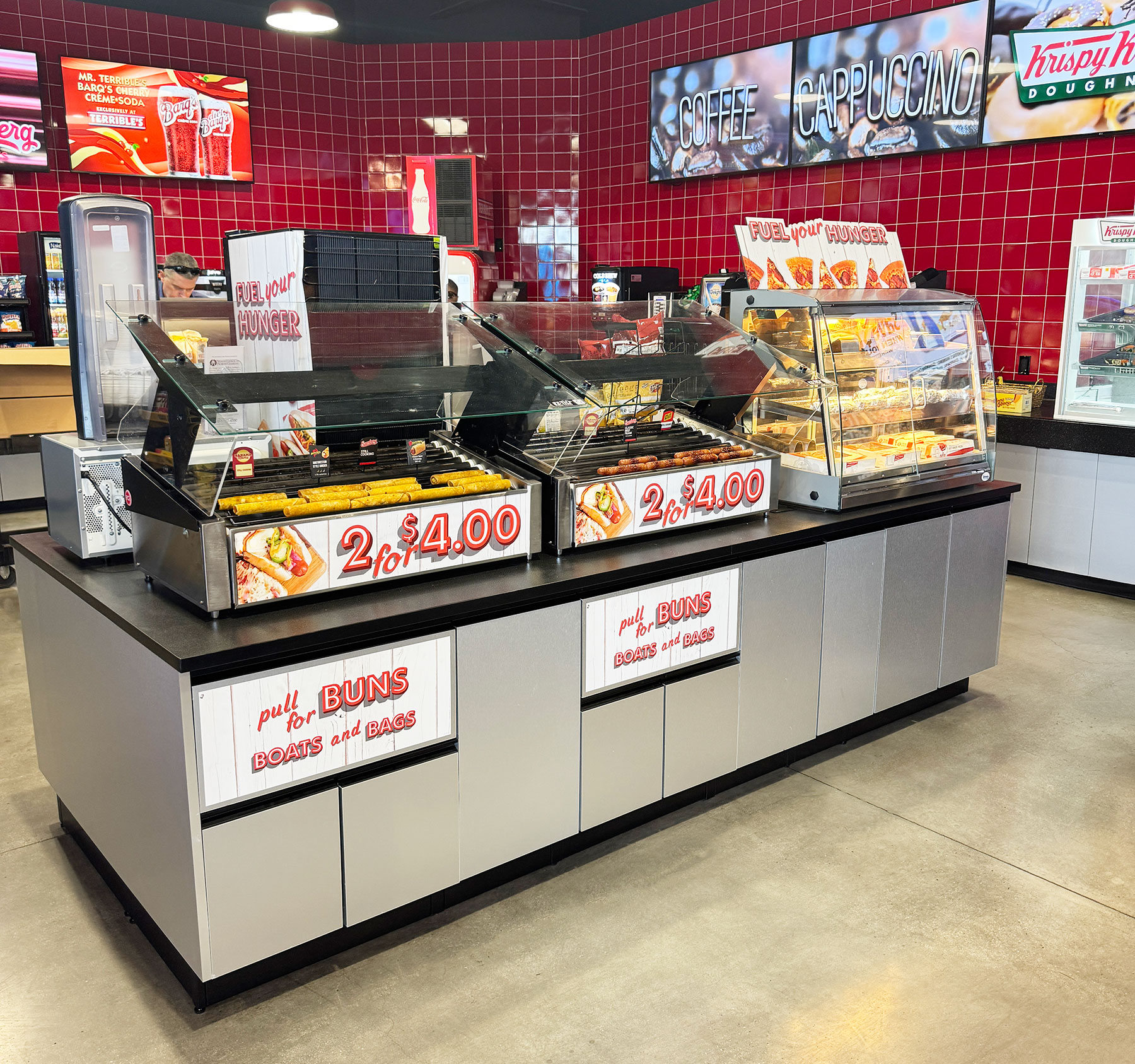
Roller grill programs remain one example of how foodservice environments are evolving around convenience, visibility, and operational efficiency.
In many modern retail environments, roller grills support:
- Fast grab and go purchasing
- High visibility food merchandising
- Self service convenience
- Labor efficient hot food programs
- Portable meal solutions
- Cross merchandising opportunities with beverages and packaged snacks, along with stronger grab and go merchandising visibility.
When positioned effectively within customer traffic flow, roller grill programs can support impulse purchasing while helping operators create foodservice environments that feel fast, simple, and approachable.
This is particularly important in environments where customers are making decisions in seconds rather than minutes.
Prepared Food Programs Continue Expanding Across Modern Retail Environments
Prepared food continues becoming one of the most important growth areas inside convenience retail and modern foodservice environments.
According to industry reporting, prepared food categories often generate some of the strongest margins inside convenience retail, with roller grill items, breakfast sandwiches, and grab and go meal programs continuing to support both profitability and customer convenience.
Prepared food is also one of the largest contributors to foodservice sales inside convenience retail environments, accounting for a significant share of category growth.
These programs perform well because they align closely with modern purchasing behavior:
- Fast decision making
- Portable meal solutions
- Self service convenience
- Speed of purchase
- Commuter friendly accessibility
- Consistent availability throughout the day
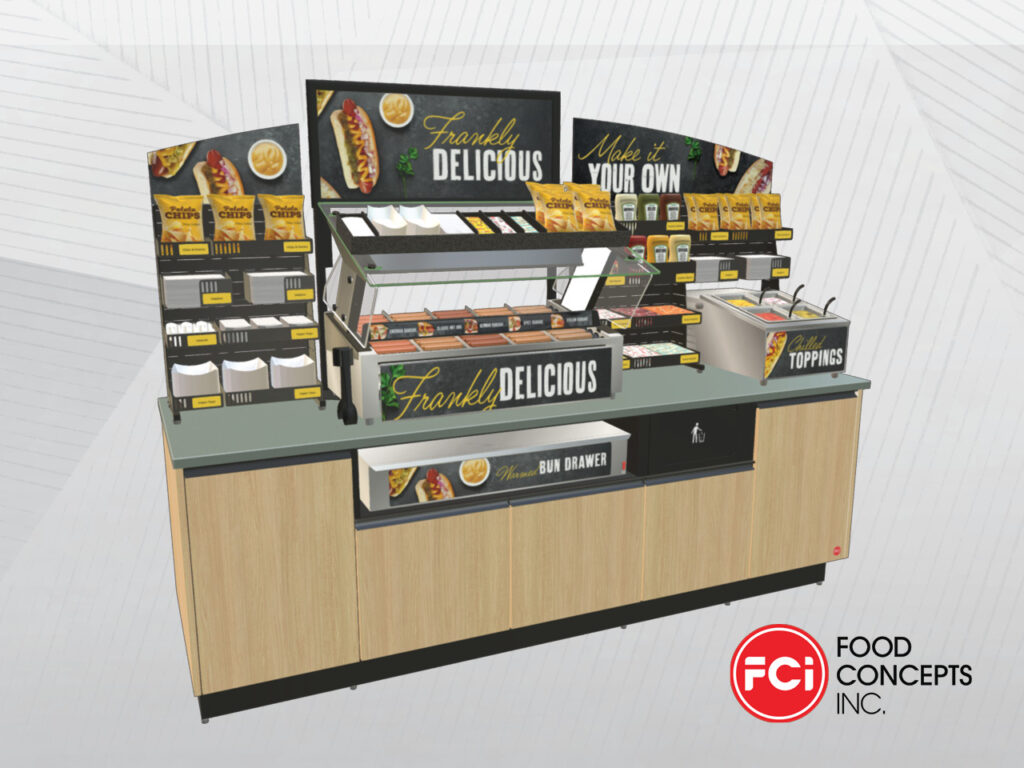
In many environments, roller grill programs and prepared food stations help operators create highly visible foodservice destinations without significantly increasing operational complexity.
This is especially important across:
- Convenience stores
- Travel centers
- Stadium concessions
- College foodservice
- Hospital retail foodservice
- Workplace grab and go programs
As operators continue investing in prepared food and hot grab and go programs, merchandising visibility, operational flow, and customer convenience will likely remain central competitive advantages.
Source: https://www.posnation.com/blog/c-store-categories-with-surprisingly-high-margins
Operational Flow and Merchandising Strategy Are Becoming More Connected
Retail environments are increasingly being designed around movement and behavior.
Operators are paying closer attention to customer flow, merchandising visibility, operational simplicity, and the overall retail experience through more strategic foodservice and retail environment planning.
In many environments, merchandising strategy is no longer separate from operational strategy.
The two are becoming deeply interconnected.
As foodservice continues expanding across convenience retail, travel centers, concessions, and hybrid retail environments, operators that reduce friction and improve customer flow may be better positioned to compete long term.
What Modern Operators Should Prioritize Moving Forward
As customer expectations continue evolving, operators should increasingly think about how retail environments support:
- Speed
- Simplicity
- Visibility
- Confidence
- Convenience
- Operational consistency
Modern foodservice environments are increasingly competing on experience quality as much as product selection.
The environments performing best are often the ones that make purchasing decisions feel easy.
At Food Concepts, Inc. (FCI), we continue watching how merchandising strategy, operational flow, customer behavior, and foodservice environments evolve together across convenience retail, travel centers, QSR environments, and modern grab and go retail systems.
Because increasingly, the environment itself is becoming part of the customer experience.
