
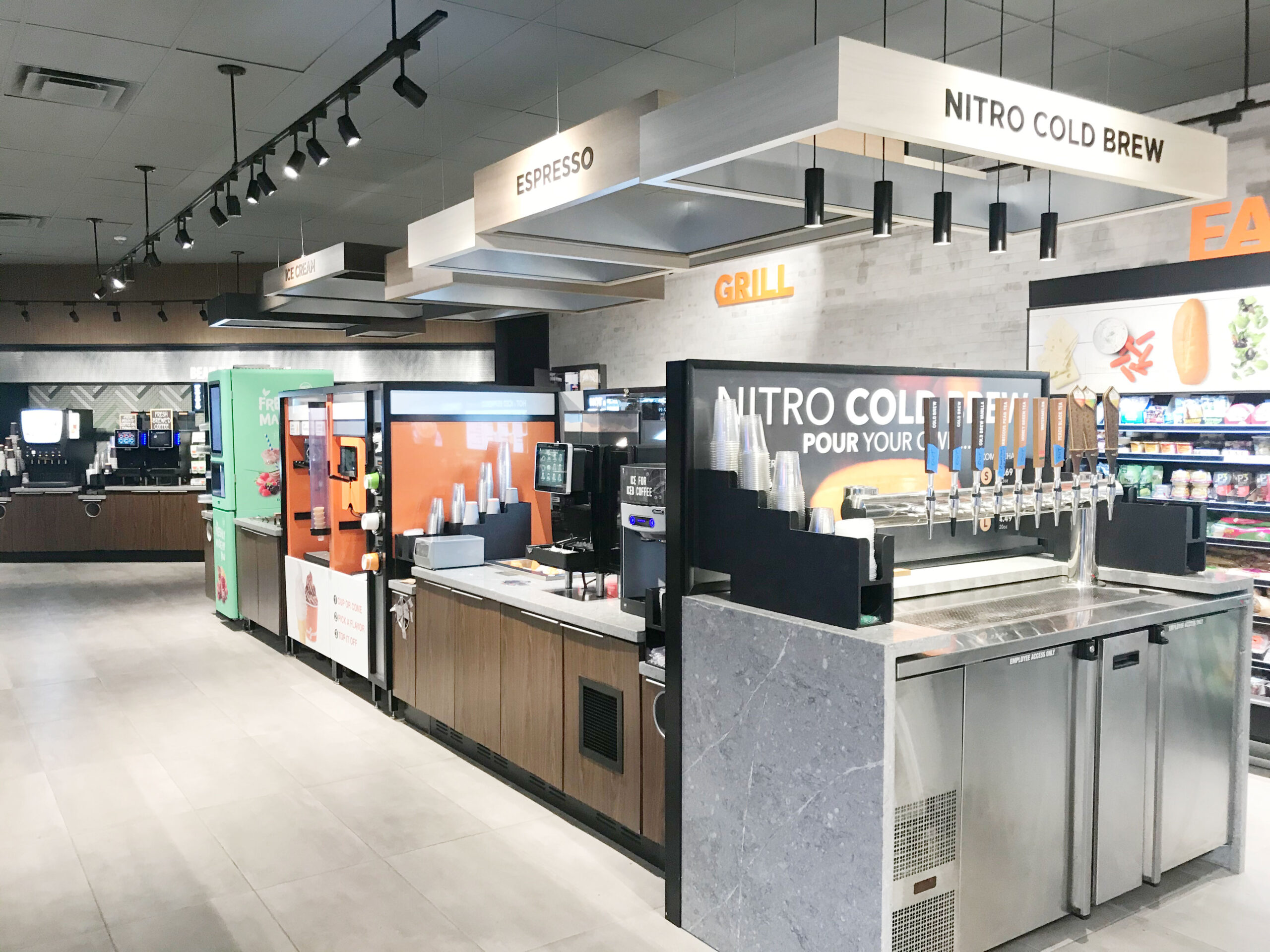
The Equipment Is Ready. Is Your Store? What to Think About Before NACS
The NACS Show is built for discovery.
1,200+ exhibitors and thousands of products will fill 435,000 square feet of Expo space at the 2026 show in Las Vegas. Retailers can explore everything from foodservice equipment and store operations to merchandising, technology and the next generation of convenience retail solutions.
This year’s NACS theme makes the goal especially clear: Maximize Your Return on Insight.
Better insight should lead to better decisions and, ultimately, better financial results.
But there is an important step between discovering something on the show floor and putting it to work inside a store.
The equipment may be ready. Is the store ready for it?
That is the question worth asking as retailers walk NACS Show 2026.
NACS Is About More Than Finding the Next Piece of Equipment
The Expo is organized into five major product areas, including Food Equipment & Foodservice Programs and Facility Development & Store Operations. The latter specifically focuses on store design, layout optimization and operational efficiency.
The education agenda tells a similar story.
NACS has sessions this year on designing stores around foodservice, build-versus-remodel strategies, space planning, merchandising, food safety, technology and customer experience. One session, Designing a Store with Foodservice in Mind, looks specifically at how layout, customer flow, kitchen space, equipment, operations and brand experience work together.
That matters because equipment rarely enters a store by itself.
A new oven, warmer, beverage system, display, self-service concept or other piece of equipment changes what happens around it.
So before the excitement of the show floor becomes a purchase order, start with the operation.
1. What Does the Equipment Need to Accomplish?
Start with the program, not the product.
Ask:
- What food, beverage or service does it support?
- Who operates it?
- Who replenishes it?
- Is it customer-facing, employee-facing or both?
- What happens during the busiest daypart?
- How often does it need cleaning or service?
- What supplies need to stay nearby?
- How does it affect the customer experience?
Recent NACS shopper research reinforces why those questions matter.
Foodservice continues to grow as a reason customers visit convenience stores, but NACS also describes foodservice as a significant investment involving equipment, training, food safety, supply chain, supplier relationships and spoilage.
The equipment decision is only one part of the program.
2. Will It Actually Work in the Space?
A specification sheet tells you the dimensions of the equipment.
It does not necessarily tell you how the equipment will behave inside a working store.
Consider:
- Equipment footprint
- Required clearances
- Door or panel access
- Electrical requirements
- Plumbing or ventilation
- Employee workspace
- Customer circulation
- Replenishment access
- Storage
- Packaging and utensils
- Condiments
- Waste
- Sightlines
- Adjacent equipment
A unit may technically fit a counter while making the surrounding operation harder to use. That is why the surrounding foodservice environment matters just as much as the equipment itself.
That is why layout and customer flow are explicitly part of NACS’s own 2026 foodservice-design conversation.
FCI’s CAD team can take an equipment specification, concept or rough idea and develop detailed technical drawings, 3D models and manufacturable solutions around the actual environment.
3. What Does It Change Around It?
New equipment often creates a ripple effect.
The project may also need:
- New cabinetry or countertops
- Food protection
- Equipment shrouds
- Storage
- Product organization
- Condiment organization
- Menu identification
- Graphics and branding
- Merchandising
- Signage
- Customer access
- Employee access
- Installation support
This is where an equipment decision can quickly become a store-planning decision.
FCI brings store planning, design, CAD and engineering, graphics, fabrication, printing, fulfillment and installation together within one organization.
So instead of asking only:
Where can we put this?
Ask:
What needs to happen around this equipment for the entire program to work?
4. Does the Idea Work in an Existing Store, a New Store or Both?
NACS is not only talking about new concepts this year.
Its education agenda includes a session devoted to build, buy or remodel strategies, reflecting the different realities retailers face when growing or updating their store networks.
That distinction matters when evaluating equipment.
A new-store environment may give you freedom to plan utilities, cabinetry and workflow around the equipment from the beginning.
An existing store may require a different approach:
- What can stay?
- What has to move?
- Can the new solution work within the existing footprint?
- Can cabinetry be modified or replaced?
- Can the design complement the current store environment?
- How much disruption will installation create?
FCI works on both new concepts and existing environments, including custom fixtures and cabinetry designed around the specific footprint.
The best solution is not always the one that starts with a blank sheet of paper.
Sometimes it is the one that makes a new idea work inside the store you already have.
5. What Happens When One Store Becomes 50, 500 or 5,000?
A new concept can look great in a prototype.
Scale changes the equation.
Store footprints vary. Utilities vary. Existing conditions vary. Menu mixes vary. Employee workflows vary.
Before rolling out a concept, ask:
- Which elements need to be standardized?
- Which elements need flexibility?
- Can the fixture adapt to different footprints?
- Are graphics reproducible?
- Can components be manufactured consistently?
- How will everything be packed and shipped?
- What does field installation require?
- Can store teams execute the program consistently?
FCI supports projects from design through fabrication, printing, fulfillment, shipping and national installation, which allows rollout considerations to enter the conversation earlier.
A solution designed for one store is a project.
A solution designed to work repeatedly becomes a program.
6. Does the Design Leave Room for What Happens Next?
One of the biggest opportunities at NACS is seeing what is coming next.
The Cool New Products Preview Room, New Exhibitor Area and NACS Future of Convenience programming are specifically designed to expose retailers to emerging products, technology and ideas.
That also means today’s store design needs some room to move.
Menus change.
Equipment gets replaced.
Seasonal offers come and go.
Merchandising priorities change.
Technology evolves.
Stores remodel.
A strong foodservice environment should support what the operation needs today without making every future change a construction project.
That is where adaptable cabinetry, modular merchandising and thoughtful store planning can protect the operator’s ability to change.
Build Two Lists at NACS
Most attendees will arrive with a list of exhibitors, products and sessions they want to see.
Make a second list.
Ideas worth bringing back to the operation.
When something catches your attention, note:
- What problem does it solve?
- Where could it go?
- What does it replace?
- What needs to change around it?
- What does the employee workflow look like?
- What does the customer experience look like?
- Can it work across different store footprints?
- What would it take to roll it out?
That is how show-floor discovery begins turning into return on insight.
See Something at NACS That Could Work in Your Stores?
Bring the idea to FCI.
Some customers come to us with finished drawings.
Others come with a piece of equipment, a photograph, a challenge or an idea they saw at a trade show.
FCI can help take that idea from concept to implementation with store planning, CAD and engineering, custom fixtures, cabinetry, graphics, merchandising, fabrication, fulfillment and rollout support.
Going to NACS Show 2026? Let’s connect.
