
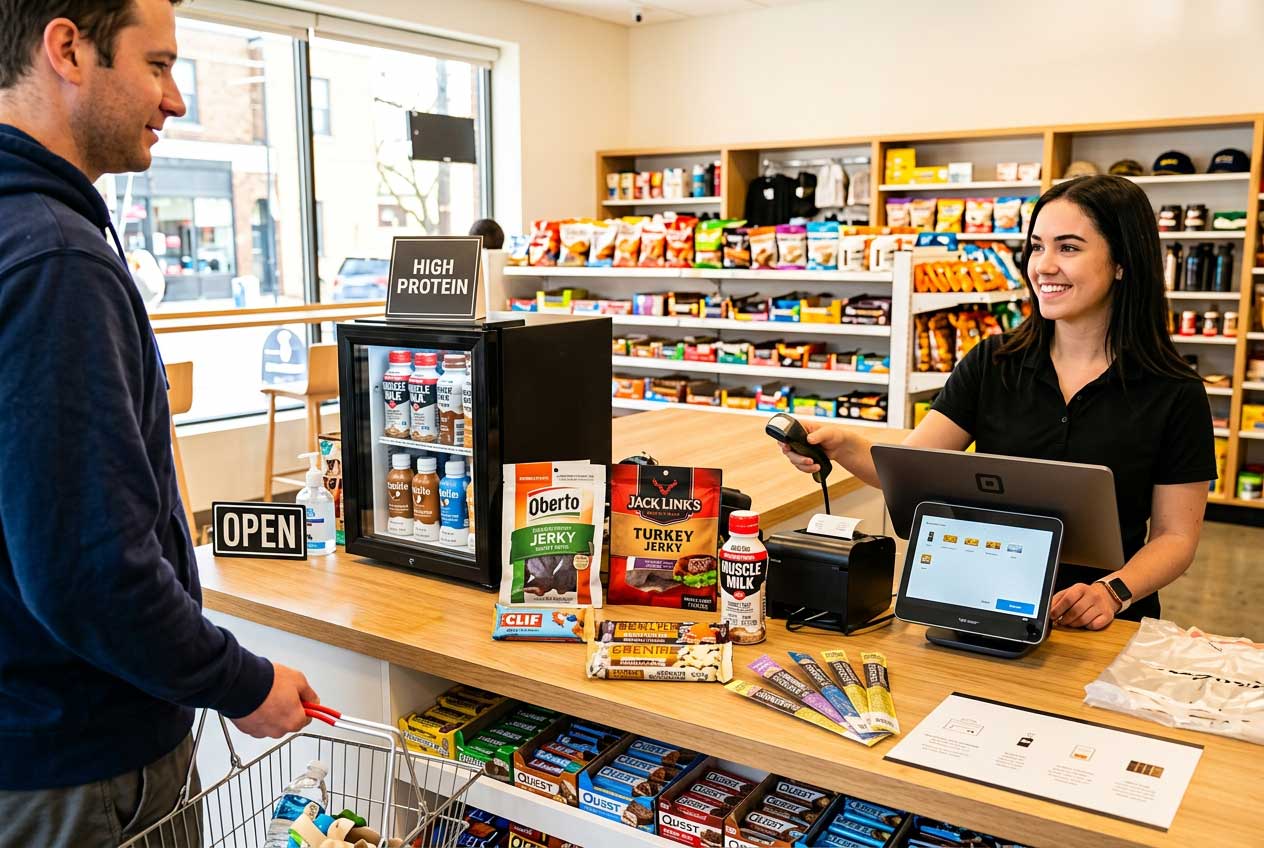
Protein Is Rewriting the Rules of Convenience
Walk into a convenience store today and you’ll notice something different. The shelves haven’t just changed, they’ve bulked up.
Protein is no longer a niche play for fitness enthusiasts. It’s become a daily priority for mainstream consumers, and c-stores are responding fast.
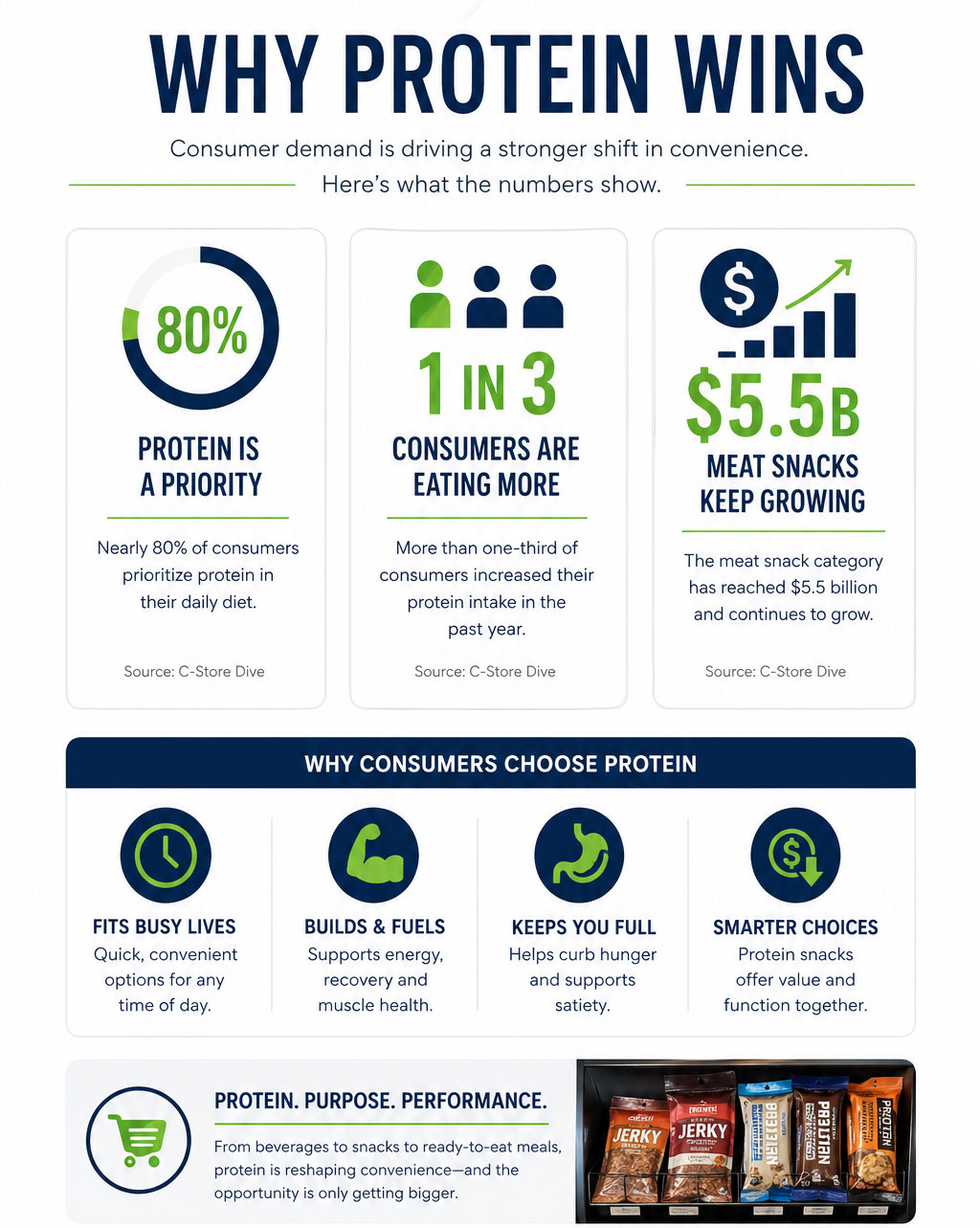
A recent report from C-Store Dive highlights just how quickly this shift is happening. More than one-third of consumers increased their protein intake over the past year, and nearly 80% now prioritize protein in their daily diet.
That kind of demand doesn’t sit quietly. It reshapes menus, merchandising, and entire store layouts.
From Snacks to Small Meals
Protein is changing how people eat, not just what they eat.
Consumers are moving away from traditional meal structures and replacing them with smaller, more intentional eating occasions throughout the day. Protein plays a key role because it delivers something most snacks never promised before: staying power.
That’s why items like:
- Meat snacks and jerky
- Protein bars and cookies
- Yogurt and dairy cups
- Ready-to-drink protein beverages
are showing up everywhere, from coolers to endcaps.
The meat snack category alone has reached about $5.5 billion and continues to grow.
Why It’s Happening Now
This isn’t just a trend. It’s a convergence of behavior shifts:
- Time pressure: People want quick, satisfying options
- Health awareness: Protein supports energy, fullness, and muscle health
- Economic factors: Smaller, functional meals can replace full purchases
Even at 7-Eleven, the impact is clear. The retailer reports selling roughly 62,000 protein drinks per day, with many used as meal replacements.
Merchandising Matters More Than Ever
As protein demand expands, placement becomes just as important as product.
Leading retailers are:
- Creating dedicated protein sections
- Expanding cooler space for beverages
- Adding protein callouts on fresh food
- Positioning items near coffee, checkout, and high-traffic areas
Some stores are even building entire “protein aisles” to make shopping easier and faster. If customers are shopping with intent, the store needs to guide them clearly.
Where Impulse Still Wins
Even with more intentional shopping, impulse hasn’t gone anywhere. It has just evolved.
Protein snacks are now one of the most effective impulse categories because they check three boxes:
- Quick decision
- Perceived value
- Functional benefit
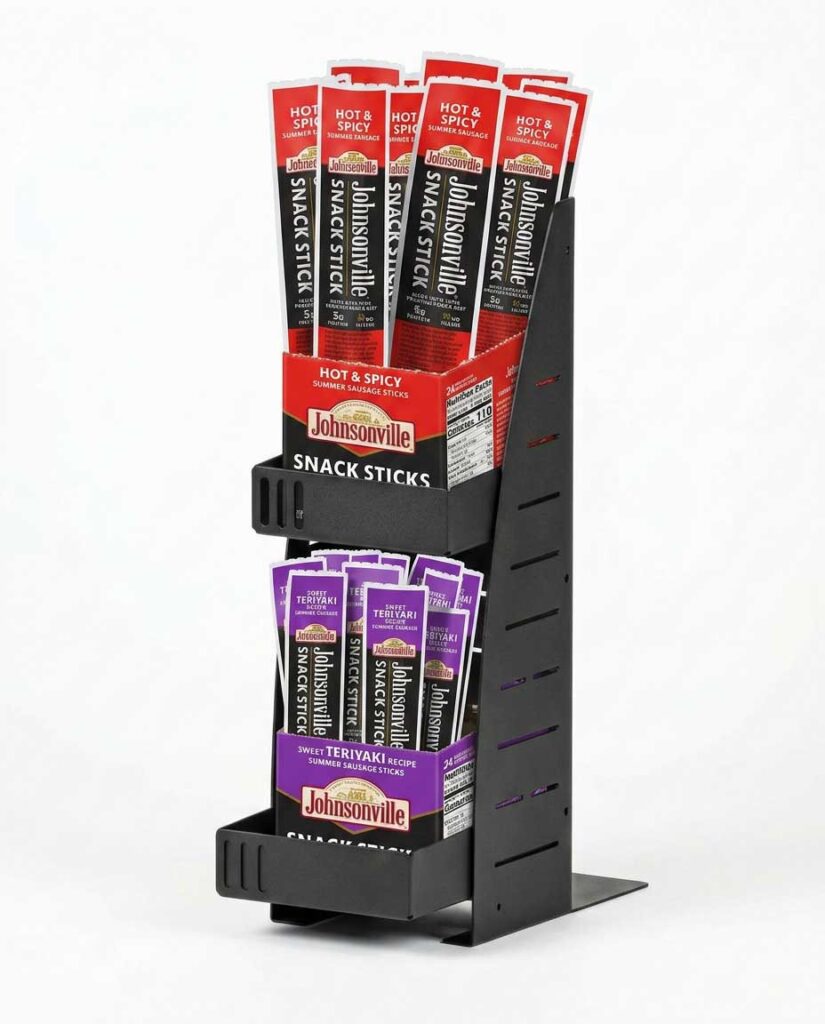
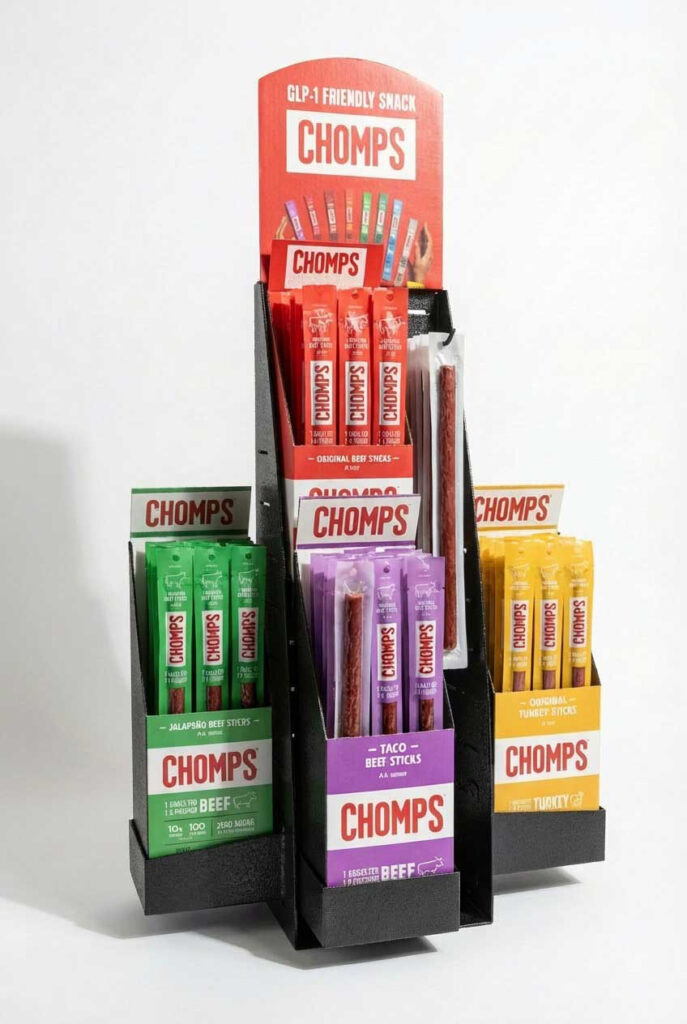
That makes them perfect for compact, high-visibility displays near checkout or along key traffic paths.
This is where something like the PanelRak™ Impulse Merchandiser fits naturally. It keeps protein-forward items like bars, jerky, and grab-and-go packs organized, visible, and easy to shop without taking up valuable space. Not flashy. Just effective.
The Bigger Picture
Protein isn’t just another category expansion. It’s a signal of where foodservice is heading.
Consumers want food that works harder for them. More function, more flexibility, and less friction.
For c-stores, that creates a clear opportunity:
- Think beyond traditional snacks
- Merchandise with purpose
- Make better choices easier to find
Because when customers start treating snacks like meals, the stores that adapt fastest will win the most.
